Strategic process for your profits The most optimal consulting solution.

Business

PET preform pricings

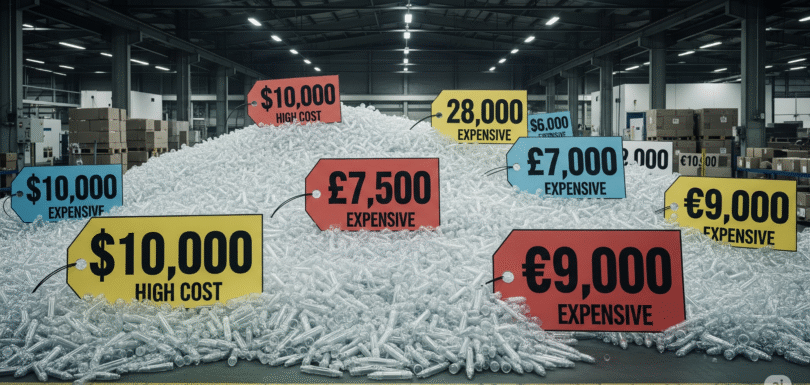
Avoid Overpaying For PET Preforms in India

If you think you’re paying too much for PET preforms, you’re probably correct! This article will cover everything you need to know about the quality of PET bottle preforms, as well as how to make smart decisions when purchasing PET bottles for wholesale. Table of Contents What Are PET Preforms? A PET preform is simply a small piece of plastic that is used to create a finished product that is significantly different from the PET preform itself. PET preforms are typically created using a mould. During manufacturing, the small pieces of plastic are heated until they become malleable and able to be formed into the desired shape. Easily moldable PET preforms are very popular within the beverage, cosmetic, and pharmaceutical industries because they are easy to create using standard manufacturing processes. With the global market for PET preforms reaching an estimated 27 million tons according to Statista, India is among the fastest-growing markets! Why Should You Care About PET Preforms? The demand for PET preform products is currently skyrocketing: In 2022, Statista estimated that the size of the global PET market was $23 billion and growing rapidly because of its use in beverages. When purchasing PET bottles in large quantities, knowing plastic preforms will put you well ahead of other purchasers. If you do not know what you’re purchasing for PET bottles, you might be paying too much and getting less than you expect. From Preform to Bottle: How the Magic Happens Did you ever notice how a small preform bottle is transformed into a full-size PET bottle? It is similar to watching a balloon blow up, except for all of the technical processes involved. It looks like this: 1. Heating The first step to creating a PET bottle is heating the preform in the infrared ovens to heat evenly throughout. 2. Stretching The preform must be stretched by the stretching rod to evenly stretch the preform vertically. 3. Blowing Finally, the preform must be blown into the shape of a bottle using high-pressure air blown into the preform inside the bottle mould. 4. Cooling After being cooled, the bottle will stay in its new form. The entire process takes a matter of seconds and is very efficient, which is why PET preform bottles are used widely in high-speed manufacturing. For example, a 30-g PET preform can be transformed into a 1-L bottle for carbonated beverages or bottled water. The same mould can be reused many times, resulting in lower production costs and shorter production lead times. If you are looking for wholesale PET bottles or require a limited amount of product, understanding how PET preforms work will help you make informed decisions about which specifications to choose. Sounds simple? It can be very challenging to accomplish without high-quality PET preforms. If you do not have a well-manufactured preform, you can experience weak bottle walls and leaks in the closure, and even have complete production failures. All of the output from a carbonated beverage factory or small bottled water company depends entirely on strong production-quality bottles made from PET preforms. The Hidden Cost of Overpaying: It’s Not Just the Price Tag You may dismiss ₹0.50 as an insignificant amount when purchasing one PET preform, but if you were to purchase 1 lakh units of the same preforms, your loss would become apparent as your expenses increase by ₹50,000. The true cost of your PET preform purchases is as follows: The India Brand Equity Foundation estimates India’s packaging industry will grow by 18-20% per year, which is causing significant competition among companies. Understanding how much you’re losing on bottle preforms will help you to maintain your production costs to be more competitive in the market. In conclusion, paying extra for a “slightly higher priced” PET bottle preform will cut into your profit margins. Why Prices Vary So Much for the Same Product Have you ever wondered why one supplier charges ₹4 for a PET preform and another charges ₹6 for a PET preform that appears to be the same? The price differences can be attributed to: Type of Resin Used to Make the Preform Virgin resin vs. recycled resin. Location of Supplier’s Facility Shipping costs differ between states, which increases costs. Quality of Mould Used to Manufacture the Product Higher-quality moulds provide greater precision and create higher-cost items. Number of Units Ordered Buying in higher quantities generally results in lower per-unit pricing. Weight of Preform A preform that weighs 26g can be used for a different purpose than one that weighs 32g. Even colour affects cost! Green-tinted PET preforms that are manufactured for use with carbonated beverages generally cost more due to the price of pigments. To save yourself money, don’t just compare products’ prices, but also the specifications of the products, the type of resin used, and the reliability of suppliers. Virgin vs. Recycled PET: Does It Really Matter? Virgin PET is produced from derivatives of crude oil and has excellent clarity and tensile strength, making it ideal for wholesale food-grade PET bottles. Recycled PET (rPET) is made from the recycling process of used bottles. rPET is more environmentally friendly and generally less expensive than virgin material. The colour of rPET can vary slightly from the original colour of the bottle. The McKinsey report indicates that the adoption of rPET would result in up to 25% less packaging-related carbon dioxide emissions. In India, the BIS (Bureau of Indian Standards) is starting to allow the use of rPET for use in food packaging. As a result, the cost to make your bottle preform to use rPET will likely be a lower cost and greener than virgin materials and will still provide the same level of safety. How to Spot a High-Quality PET Preform The quality of the PET preform is of utmost importance because it has a direct impact on the durability, clarity, and overall performance of the finished product. A low-quality preform will produce a defective finished product, including a product with an inconsistent wall thickness, susceptible to weak
Continue Reading
preform defects

7 Pet Preform Defects Killing Your Profits and How to Fix Them

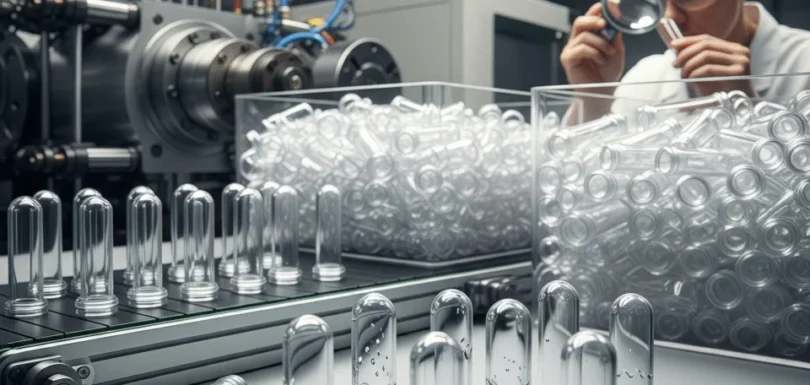
Precision and consistency have become non-negotiable requirements for successful PET preform manufacturing. The profitability of many companies that use PET bottles to package beverages, oils, or other liquids is reliant on the quality of the preform. As such, a minor pet preform defects could result in significant lost profits due to product rejection, production delays, and unsatisfied customers. As a leading manufacturer of PET preforms in Gujarat, we at DRJ Plasttech know firsthand how substantial the loss can be from using poor-quality preforms. With over 15 tonnes of premium-quality preforms produced daily from our Surat facility, which spans approximately 40,000 sq ft, we’ve learned that the implementation of consistent quality control will maximize our clients’ profit and reduce costs when compared to those who are still using a non-standard production process. In this blog, we will discuss seven common defects associated with manufacturing PET preforms, along with ways to correct these issues through proven strategies derived from DRJ Plasttech‘s manufacturing expertise. Table of Contents 7 Preform Defects Killing Your Profits and How to Fix Them 1. Black Specks in Preforms 2. Bubbles in Preforms 3. Yellowing or Discolouration 4. Short Shots Intermission: Why Quality Control Matters 5. Flash at Parting Line 6. Uneven Wall Thickness 7. Crystallinity Defects How DRJ Plasttech Minimises PET Preform Defects To Conclude Top 10 FAQs on PET Preform Defects Ready to Eliminate Defects From Your Supply Chain? Let’s dive straight into the most common PET preform defects: 1. Preform Black Specks Cause:  Black specks are caused by the degradation of the resin/base material when making a preform. It can also be caused by leftover material from a prior production run that contaminates the preform when producing a new one. Lastly, small particles of dust or carbonized materials can appear as black specks in the preform. Impact on Profitability:  The presence of black specks on a preform reduces the consumer’s ability to see through the container; hence, reducing their perceived value. In food or pharmaceutical packaging, any visible black specks result in the entire batch of product being rejected due to the potential for contamination. Remedy:  Our specialized systems at DRJ Plasttech take the necessary steps to eliminate black specks before production through advanced cleaning systems combined with quality control measures we have in place to capture contaminants and eliminate their occurrence within our preforms. 2. Bubbles in Preforms Cause: The primary cause of bubble formation in preform containers made from PET (also known as Polyethylene Terephthalate) is the moisture content present in the resin before production. The resin’s ability to absorb moisture from the surrounding air (hygroscopicity) creates bubbles when heated or melted during the injection process. Moisture present in the resin will convert to vapour during the injection process, producing bubbles. Impact on Profitability: The presence of bubbles in a bottle compromises the strength of the bottle and increases the likelihood of failure during storage and transportation. If your company is producing carbonated beverages, for example, a bottle that contains air bubbles may leak or even break open when being filled or transported, causing expensive rework and excess material waste. Remedy:  At DRJ Plasttech, we employ sophisticated drying systems that guarantee our preforms are free of bubbles and meet the structural standards required for the highest quality end products. 3. Yellowing or Discolouration Cause: Heat build-up during the Injection Moulding Process is the most common cause of Discoloration or Yellowing in the PET Preforms. Other causes may include extended residence times within the injection barrel, or the use of Recycled Materials with excessive levels of impurities. Impact on Profitability: The Discoloration of Preforms or their yellowed appearance negatively impacts the overall appeal of your finished Product, especially if they are to be used in clear or lightly tinted packaging. Customers will ultimately reject any Products that do not conform to their colour specifications, and Quality Control inspections may also reject any Product that exhibits evidence of yellowing. Remedy: At DRJ Plasttech, we have installed a computer-based Temperature Monitoring system to ensure that each time we produce a batch of PET Preforms, the Heat Profile has been Consistently maintained, thereby reducing the risk of discolouration. 4. Short Shots Cause: When the mould cavity is not filled during injection, it creates short shots. This occurs when injection pressure is not adequate, the size of the shot is incorrect, or there are blockages in the runner or gate systems. Impact on Profitability: Short shots that are not usable must be discarded, and worse yet, they may be missed before blowing and may result in machine downtime and excess waste. Remedy: DRJ Plasttech implements a preventative maintenance plan to keep our moulds in the best possible condition to prevent defects like short shots. Intermission: The Importance of Quality Control At DRJ Plasttech, we do more than manufacture PET preforms; we create uniformity through engineering. We have inline inspection systems, mould temperature controllers, and accurate dosing systems in our facility to ensure all preforms meet specific customer requirements. Need preforms that are free from defects consistently? Contact us to learn about how we can help with your packaging needs and to receive a complimentary consultation. 5. Flash at Parting Line Cause:  During injection, flash happens when extra plastic seeps out between the mold halves. Usually, it is caused by worn mold parts, misaligned molds, or high injection pressure. Impact on Profitability:  Even tiny flashes require post-processing or trimming, which increases labor and expenses. Bottle leaks or capping problems may result from inconsistent flash removal, which can harm preform necks. Remedy: To reduce the possibility of flash and guarantee that every preform satisfies client needs, DRJ Plasttech regularly calibrates and aligns its molds. 6. Uneven Wall Thickness Cause:  Inadequate material flow, problems with mold design, or uneven preform heating during blowing are frequently the causes of variations in wall thickness. Inadequate mold cavity balance may also be a factor. Impact on Profitability: Blow-out, weak bottle structure, and deformation during filling are more likely to occur in preforms with uneven
Continue Reading
x

Contact Us!

Block No 271, Navi Pardi Mazda Gali, Kamrej, Pipodara, Surat, Gujarat, 394110

Mon to Sat – 9:00 am – 8:00 pm