
Strategic process for your profits The most optimal consulting solution.

Business

Pet preform

The Best Supplier of 26/22 Neck Preforms in Gujarat

The Packaging Industry in India has become a very important industry for India as it encompasses bottled water, juices, carbonated soft drinks, and household items; however, all of these items rely on the very foundational item of strong, safe, and reliable preforms made from PET (Polyethylene Terephthalate) plastic, which are used in the making of bottles. Of the many different types of preforms available in the growing market, the 26/22 neck preform has become one of the most popular formats used today by many manufacturers. In this blog, we will explain simply what these preforms are, why they are important, and why DRJ has consistently been ranked as the best preform manufacturer and the leading supplier of 26/22 neck preforms in Gujarat. What is a 26/22 Neck Preform? The 26/22 preform is a semi-finished item made out of PET (Polyethylene Terephthalate) plastic that resembles a test tube that has a screw thread neck. After this preform has undergone a blow-molding process, it will be transformed into a final product (bottle). The terminology 26/22 represents the dimensions of the neck, which consist of two measurements: (26 mm) for the diameter of the mouth, and (22 mm) for the height of the screw thread. The 26/22 preform is the backbone of the bottled drinking water and carbonated beverage industries. Why PET Preforms Are Important in Packaging The most widely used packaging material is PET (Polyethylene Terephthalate). It is lightweight, durable, easy to recycle, and safe to use for food products. The PET packaging market in India has been estimated to be approximately $1.9 billion in 2023 and is projected to see 6.3% annual growth rate through 2026, according to Mordor Intelligence (2023). PET preforms are critical for the production of bottles of all shapes and sizes. Without PET, it would be impossible to consistently produce the same quality of bottles for mass production in: The Growing Demand for 26/22 Preforms in India The bottled water market in India has grown to become one of the largest markets for bottled water in the world, and as of 2022, the Bureau of Indian Standards (BIS) has reported that there are approximately 1,400 bottled water manufacturing facilities across the country. The primary source for the majority of this manufactured product comes from the state of Gujarat due to the heavy concentration of manufacturing and production facilities that are available. The packaged drinking water segment is expected to reach INR 403 billion in value by the year of 2026, growing at over 20% per annum according to Rajesh and Partners (2023). The primary drivers for this growth include an increase in urbanization, modernization of lifestyles, and an increasing focus on the hygiene aspects of daily diet choices. The growth in this sector will create additional opportunities for suppliers of 26/22 preforms. DRJ – The Biggest PET Preform Manufacturer in Surat In Surat, Gujarat, DRJ has earned the title of the top PET preform supplier in its region due to the time and resources invested in upgrading equipment and implementing stringent quality assurance policies. Organizations that utilize the services of DRJ select DRJ because of: How DRJ Stands Out from Market Standards Numerous companies are offering PET Preforms in Gujarat, but DRJ is distinguished from the others by the following: Applications of 26/22 Neck Preforms In order to fully understand how these preforms translate into finished products on the marketplace, let us take a look at what products people use daily. Packaged Drinking Water Bottles – The most significant use of 26/22 preforms is packaged drinking water bottles, being manufactured by most of the manufacturers,  and most commonly found as 500ml and 1l water bottles. Soft Drinks and Carbonated Beverages – Major soda manufacturers also utilize PET preforms of this size when manufacturing their beverage bottles. Juice and Energy Drinks – This size is also suitable for medium-sized juice bottles as well as small-sized juice bottles. Edible Oils and Other Liquids – Some oil and liquid condiment manufacturers utilize bottles in this size for their products. As an example, the Indian bottled water industry alone consumes millions of PET preforms daily, and if suppliers like DRJ did not exist, this supply demand could not be satisfied consistently. Real-World Impact of PET Preforms The Packaging Industry Association of India (PIAI) estimates that packaging is the fifth-largest sector in India, currently growing 22–25% each year (PIAI, 2023). The result of this growth is a significant increase in the demand for manufacturers producing PET preforms. India’s per capita consumption of bottled water has grown from ~5 litres 10 years ago to ~25 litres per person each year (India Water Portal, 2022). Most of the water is supplied in bottles using 26/22 neck preform bottles. As a result, the need for a dependable 26/22 preform bottle supplier in Gujarat has never been greater. Why DRJ is the Best PET Preform Manufacturer for You Businesses looking for a manufacturer of PET preforms in Gujarat will want to find a manufacturer that has a combination of experience, technology, and service. DRJ can meet all of these criteria by offering:  To Wrap Up The 26/22 neck preform is an essential part of one of today’s most important packaged beverage industries; packaged beverages are growing at an unprecedented pace in India. With the rise of the packaged drinking water and soft drink industries in India, the demand for suppliers has never been greater. DRJ is one of the largest PET preform manufacturers in Surat and is considered to be a top performer in Gujarat for 26/22 neck preforms. Through providing consistent quality, bulk manufacturing capacity, and superior service to our customers, DRJ has rightfully earned its reputation as the best PET preform manufacturer in Gujarat. If you are looking to secure your packaged beverage supply chain, DRJ Plasttech is not only a supplier but also a long-term growth partner.
Continue Reading
plastic bottle caps

Buying Plastic Bottle Caps: How to Avoid Costly Closure Fails With Better Specs

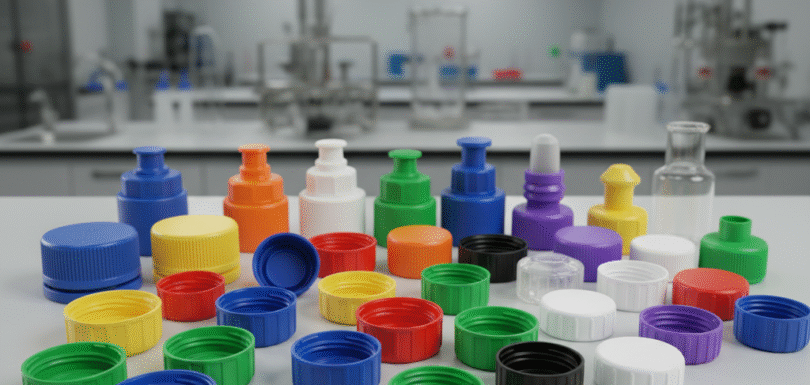
Packaging small details has the largest impact. Plastic bottle caps are one of the most unnoticed but most important components. A weak or improperly fitted cap will create leaking, contamination, and product recalls that will cost businesses much more than what was saved. If you’re looking for closures for any type of water or soft drink, oils or pharmaceutical products, or plastic caps used for drinking purposes, it’s important to ensure you specify the right one for the particular application. Choosing the appropriate bottle cap for your product guarantees safety to the user through proper sealing conditions, along with improving the shelf appearance of the product, convenience to the user, and trust in your brand. This blog will discuss the reasons for the failure of closures and how they can be prevented with improved specifications, and what to look for when dealing with plastic bottle cap manufacturers. Table of Contents Why bottle caps matter more than you think One thing a consumer notices about your product right when they interact with it is the closure of the bottle cap itself. A poorly made or inconveniently designed plastic bottle cap can create immeasurable frustration with a product that’s otherwise perfect. Caps serve three essential purposes: Caps are not simply an afterthought — they are critical for brands in all categories of products because they support both product quality and brand recognition. Common closure failures and their hidden costs Using a substandard or incorrect type of cap for a plastic bottle can cause serious problems, such as: The bottom line is that the cost of closure failures far outweighs the cost of investing properly in a reliable plastic bottle cap manufacturer. The role of specifications in plastic bottle caps Most application end users’ caps are designed at a very precise level of specification. A failure to fully address the specifics can mean a lost opportunity for a functioning closure and a large monetary loss. Some of the most important caps specifications to consider are as follows: Good manufacturers of plastic bottle caps work with their customers to ensure all of their specifications for caps are tailored to optimize the product manufactured for their customers. Types of plastic bottle caps for different uses Not every cap is the same. Each product may require a different closure method depending on what it is. The following are the most common plastic cap types currently in use: 1. Screw caps It is the most versatile type of closure, as it is used for many products, such as water, juice, oil, etc. They can be easily opened, sealed again, and are available in multiple styles. 2. Flip-top caps It is primarily used in the personal care and food industries. These caps add an element of convenience by making them easier to open and dispense control when pouring. 3. Child-resistant caps It is designed for use in the pharmaceutical and chemical industry. These caps are made to prevent an accidental opening of the container and are manufactured in compliance with strict safety guidelines. 4. Sports caps It is designed specifically for hydration containers. These caps allow the user to drink while still having the cap on. 5. Dispensing caps It is commonly found on sauces and personal care products, such as shampoo and detergent. These caps allow for more controlled dispensing. Each different cap type also has its own unique design needs that must be taken into consideration by the manufacturer of plastic caps when designing caps for a given product. Plastic caps for glass bottles: special considerations Plastic closures for glass bottles have a higher emphasis on specification than those for PET bottles, as glass has limited flexibility and very little tolerance for misfit closures (compared to PET). Several primary considerations include: Industries such as premium beverages, sauces, and cosmetics use these specialized caps extensively. How to evaluate plastic bottle cap manufacturers Choosing a Plastic Bottle Cap Supplier is as important as the Cap Design. The best plastic bottle cap manufacturers supply more than just the product—their experience offers long-term partnerships with cap manufacturers regarding the cost-efficient and quality production of caps. What Should Be Evaluated When Selecting a Plastic Bottle Cap Manufacturer? When the right plastic bottle cap supplier is selected, High costs will be saved, Product failures will be prevented, and Supply Reliability will be ensured. Common myths about closures “All Caps are the Same” False. Every plastic bottle cap is manufactured to fit a specific product/s and has different specifications; there are more than a hundred options for caps. “Buying Cheaper Caps = Saving Money” True. Initially, most people think they are saving money when they purchase cheaper-quality caps. “Plastic Bottle Caps for Glass Bottles can be Used Interchangeably with PET Bottle Caps’ False. The caps that seal glass bottles must be designed with special requirements, such as tighter tolerances and better sealing power than the caps designed for PET bottles, for them to perform safely. “When You Find a Good Supplier, Specifications Mean Nothing” The Correct Answer. Even with the best plastic bottle cap manufacturer, you MUST provide correct specifications if you expect to receive a properly manufactured closure. Future innovations in plastic bottle caps The closing industry is making significant progress to accommodate the evolving needs of its consumers and regulatory agencies. Here are five trends you will see in the future of the closure industry: 1. Sustainable materials The incorporation of recycled plastics and bio-based resins into plastic bottle closures (caps) will continue to grow dramatically in volume, while still providing the same effective sealing properties. 2. Lightweight designs The development of thinner-walled, more innovative geometries for caps will continue to evolve into new cap designs that utilize less material while maintaining the same strength and functionality. 3. Smart closures Cap manufacturers are introducing the use of Near Field Communication (NFC) technology and QR Codes on plastic bottle caps to create greater consumer connection and product traceability. 4. One-piece liners Through the introduction of new liner technologies, there is no
Continue Reading
bubble top bottle

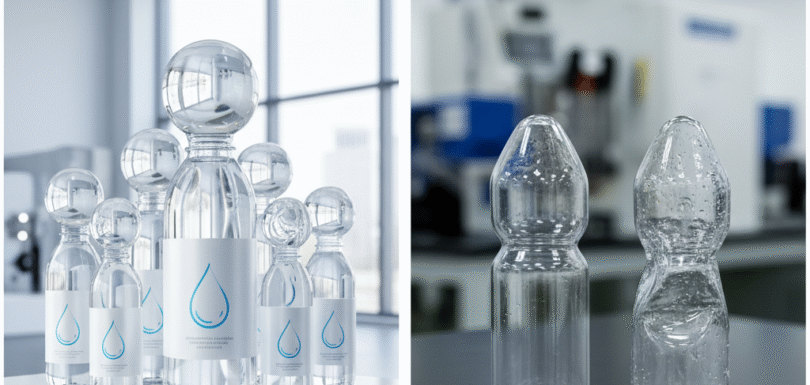
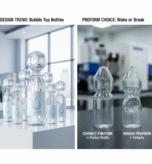
Bubble Top Bottles: Design Trends and How Preform Choice Makes or Breaks Them

The packaging industry continues to grow at an incredible rate, and one of the most important products in this growth is also the most recently developed: the Bubble Top Bottle. These large volume containers are now commonplace in homes, restaurants, offices, and gyms, as they allow people to access clean, sanitised, and safe drinking water easily; however, many people may not realise that the plastic bottle preform is an integral piece of this great development. Bubble top preforms do not merely serve as the initial shape of their respective bubble top bottles, but rather they define the weight distribution, overall strength, clarity of the product being stored inside, and, lastly, whether or not the cap will work on that particular bottle. In fact, choosing the appropriate preform can prevent leaks, breakage, and lost revenues due to improperly designed preforms. In this blog, we will examine trends in bubble top bottle design, along with the importance for every beverage company to have a solid understanding of the different types of plastic preforms in use today for bubble top bottles. Table of Contents Why bubble top bottles are in demand today The so-called “Bubble Top” bottle has become an established component of bulk water delivery systems. It’s a bottle: The expansion of cities and urban centres, an increase in public knowledge about health/fitness, and the proliferation (via organisation) of such services have also resulted in increased demand and competition for this product. Additional brands are now entering the packaged water segment, which means improved design and durability of these bottles have become vital to differentiate themselves from their competitors. Role of preforms in bubble top bottle manufacturing The preform is essentially the first step in manufacturing every bubble top bottle, so it is vitally important that it is designed and created correctly. If you take a look at large-capacity bottles, the quality and weight of the preform’s material, as well as its design, will play a significant role in producing the finished product. The preform plays an important role in several key areas of the production of bubble top bottles: Essentially, while the preform is considered a raw material, it is actually an integral part of developing a product that will perform well. Top design trends shaping the bubble top bottle industry With the rise in what consumers expect from packaging, the bubble top bottle design has also advanced with new design innovations. Currently, there are five key trends shaping the designs of bubble top bottles: 1. Lightweighting for cost efficiency Beverage manufacturers are requesting bottles that are lighter in weight yet still sturdy. Lighter bottles result in lower materials costs, plus less weight to transport. 2. Enhanced ergonomics As the shape and finish of the neck are more ergonomic to lift and pour, the bubble top bottle design has become much more ergonomic than before. 3. Sustainable design with rPET Preforms for plastic bottles are being developed with a focus on sustainability, incorporating rPET in order to have less environmental impact. Eco-conscious consumers are looking for preforms that are designed sustainably. 4. Custom branding options More beverage companies are designing custom-branded bottles with logos, unique shapes, and colouration, helping to differentiate them from similar products. 5. Durability under reuse cycles Because of the increasing reuse cycles of bubble top bottles, manufacturers will continue to seek longer-lasting preforms. How plastic preform choice makes or breaks a bubble top bottle The performance of a preform dictates the strength, appeal, and cost-effectiveness of a bubble top bottle. For any company that is purchasing plastic bottle preforms, careful consideration must be given to the factors mentioned above. A slight error in the preform process can result in an increase in both production and distribution costs later on. Key plastic preform types for bubble top bottles Different types of plastic pre-forms aren’t the same, and your ability to choose the right type can greatly affect your success in the marketplace. 1. Standard PET Preforms The most common type of plastic bottle pre-forms, these preforms are designed primarily to create “bubble top” type bottles for everyday purposes like delivering drinking water. They have a reasonable balance between strength and price performance. 2. Heavy Duty Preforms With more thickness and weight than standard preforms, heavy-duty preforms are designed for high levels of reuse or excessive handling of the final product. 3. Lightweight Preforms Lightweight preforms typically use less raw material to create the same structural supports that are present in the heavier versions. Because of this, they are popular in markets where customers are very price sensitive. 4. Recycled PET (rPET) preforms Preforms produced from recycled PET resin, either partially or fully, meet environmental concerns about sustainability and offer good strength and clarity. 5. Specialty Preforms These products are customised for specific branding needs. Specialty preform types may contain brand-specific colours, embossed logos, or unique neck finish requirements. Mistakes to avoid when selecting a preform Selecting the appropriate plastic bottle preform is important, but many organisations continue to make preventable mistakes which will ultimately affect bottle quality and profit margins. Below are the five major pitfalls to avoid: 1. Preform to bottle compatibility Plastic preform types are not interchangeable across all mould designs. If the dimensions of a preform do not match the neck size of the bottle, there will be problems creating acceptable bottle products, and moulds may reject the batch. 2. Cost is the only consideration When a company chooses the cheapest preform available, they typically sacrifice quality in return for price. A preform made of poor quality plastic may cause the finished product to be plagued with cracks and leaks and have a high reject ratio, resulting in higher costs overall. 3. Weight optimisation If a preform is either underweight or overweight, that preform may hinder overall production efficiency. A balance between the two will facilitate the production of a solid bubble top bottle and help to eliminate the chances of overspending on raw materials. 4. Inconsistent supplier quality control Not all suppliers follow
Continue Reading
plastic bottle company

The Hidden Benefits of Outsourcing PET Preforms (And How Smart Brands Are Cutting Production Costs)

The modern-day packaging market is competitive, fast-paced, and a matter of cents. For a beverage manufacturer, an FMCG supplier, or a manufacturer of consumer goods, the costs associated with packaging can determine whether or not their business is profitable. The main source of those costs is typically the production of plastic PET preforms. The majority of companies historically manufactured preforms in-house to ensure an adequate supply of product and control over their quality. However, many companies are beginning to shift their mindset away from the “do-it-yourself” model of PET preform manufacturing, to opting to outsource that function to a specialized supplier — and enjoying the benefits associated with that shift. In this blog post, I will provide insights on why outsourcing is not simply a way to save money, but instead is a way for brands to position themselves for future success, grow their businesses, improve quality, and remain competitive. Table of Contents Why preforms matter in packaging For a bottle manufacturer or brand based on bottles, preforms have direct implications for: For these reasons, many companies are reevaluating whether they should handle their own preform production or outsource to a company specializing in plastic bottle production. The rise of outsourcing in the packaging industry Outsourcing packaging isn’t something that’s new.  Companies have been doing this for some time by outsourcing their logistics, warehousing, and raw materials.  Recently, companies have started to outsource the manufacturing of plastic PET preforms. Why have companies decided to outsource their Preforms?  It takes a significant investment in equipment, machinery, molds, skilled labor, and quality control systems to manufacture the preforms.  For many brands, this is not their expertise; therefore, they rely on the capabilities of a manufacturer that specializes in the production of preforms. Through outsourcing the manufacturing of Preforms, they can reduce risk, optimize the supply chain, and utilize their capital in areas where they receive the highest return. 5 Hidden benefits of outsourcing PET preforms Most companies think about reducing their costs when outsourcing a service. However, the main benefit from outsourcing comes from the benefits received that may not be seen immediately as cost savings. 1. Reduced capital expenditure Establishing an Internal production site for the production of plastic injection-molded (i.e., PET) preforms is capital-intensive (i.e., millions in capital investment). These costs include the cost of new, high-precision injection molding machines, the cost of new molds for plastic preforms of various neck sizes, the cost of utilities, and the cost of ongoing maintenance. When brands outsource their plastic preform production, they do not have to incur the above costs, and their capital can be used for either R&D or expansion into new markets. 2. Access to expert technology In general, specialized suppliers (i.e., plastic bottle manufacturers) invest heavily in advanced injection molding and automation technologies. The outsourcing option allows companies access to these advancements without the investment needed to purchase or maintain this complex, high-quality equipment. For example, specialized plastic bottle manufacturers produce: As a result, these technical advancements help with improved quality for plastic bottle manufacturers, but these manufacturers do not have to bear the additional financial cost to upgrade their existing technologies. 3. Improved consistency and quality control Consistency throughout the millions of preforms manufactured in-house is one of the largest challenges faced by a preform producer. Even the smallest discrepancies can stop production prematurely and lead to unacceptable conditions at either the appliance or packing line. There are benefits to outsourcing the production of plastic bottles to a manufacturer who provides a constant flow of plastic bottle-grade resins with: The result is less hassle for those within purchasing departments, as well as less disruption during the production cycle. 4. Better supply chain efficiency When a company produces its own resin grades, it takes on the additional responsibilities and risks of labour shortages, machine downtime, or limitations in access to resin supplies. By outsourcing, none of these responsibilities or risks is transferred to the producer. An established outsourced producer will have the production capacity, redundancy, and logistics capabilities that are needed to provide uninterrupted resin supplies. An outsourced production partner will, therefore, be able to: Outsourcing allows plastic bottle manufacturers to minimise production bottlenecks and increase flexibility. 5. Cost savings through economies of scale The volumes of plastic PET produced by specialist plastic bottle manufacturers typically exceed 1,000 tons per year. Because of this, these companies can negotiate lower resin costs and operate their machinery much more effectively than smaller manufacturers, and also can spread their overhead costs over a larger volume of products. Brands that outsource their plastic PET preform production to these manufacturers gain access to the economies of scale that larger manufacturers can achieve with their larger-scale operations; the costs associated with having in-house operations would likely be impossible to attain for smaller manufacturers. Why plastic bottle manufacturers are embracing outsourcing Interestingly, outsourcing isn’t just a strategy for brands — even some plastic bottle manufacturers themselves outsource It is interesting to note that brand owners are not the only ones using outsourcing; plastic bottle manufacturers also outsource preform manufacturing. By partnering with a specialized manufacturer of plastic PET preforms, the manufacturer can reduce the high shipping costs associated with this supply chain and instead concentrate on their blow-molding operations. With this strategy, manufacturers can: As a result, the supply chain will become a more streamlined and efficient network whereby each supply chain segment is performed by a specialist. What to look for in a reliable outsourcing partner Finding a good partner to outsource production to is essential for success. Not all plastic bottle manufacturers and preform distributors provide the same quality, production capacity, or levels of service. When evaluating potential suppliers, several factors must be assessed: The true value of outsourcing comes when there is a reliable and trustworthy supplier who can fill the role of a long-term business partner. Common misconceptions about outsourcing preforms Outsourcing is a significant change, and like most major changes, it carries its share of myths and concerns. Below are
Continue Reading
Plastic beverage bottle made from PET preform pouring water into a glass

Plastic Bottle Buying Guide: The Small Mistakes That Cost Bottlers Big

If your industry includes beverages, FMCG, or pharma, then you understand the importance of the role that packaging plays, not only in relation to the way your product reaches the market, but also throughout the entire process: filling line, delivery to retail, and ultimately to the end consumer. Your packaging (including the bottle, preform, and cap) determines whether your product survives those stages and makes it into the hands of your customers. What most bottlers fail to recognise is how many mistakes can be made, due to lack of attention to detail, during the production process, about leaks, cracks, recalls, and damage to brand reputation, which can ultimately result from negligence when working with plastic bottle manufacturers and suppliers of caps for plastic bottles and plastic bottle suppliers in India. The following guide identifies the many pitfalls associated with these practices, explains each in layman’s terms, and provides a simple checklist for avoiding them. 1. Neck Size Compatibility & Thread Design – Your First Line of Loss Prevention Bottle manufacturers often overlook how much of a financial and time burden can be caused by an incompatibility between a beverage bottle’s neck finish and its cap if manufactured with PET preforms. A preform is a pre-blown, and therefore pre-shaped, bottle that has been injected into a mould. The neck design must be established when designing the preform. All the specifications (neck diameter, thread type, pitch, and profile) must match between production phases.  Otherwise, you may face: The possibility of extra downtime due to capping equipment being misadjusted or incorrectly utilised. As a result of the unique finishing process for PET preforms, it becomes very costly to change the neck finish during production after making the decision to use the preform. Companies producing plastic bottles and supplying manufacturers in India will frequently use some or all of the standard neck finishes (PCO necks, 3-start necks, etc.). Still, not all of these will necessarily work well with every supplier of caps. Real-world numbers Mini-Checklist Parameter What you must confirm with your preform supplier/cap supplier Neck diameter, thread pitch/profile Do a go/no-go gauge test Finish type (PCO, ROPP, etc.) Matching with the current cap tooling or your cap manufacturer’s specs Make sure the cap supplier offers compatible closure with your neck finish Make sure the cap supplier offers a compatible closure with your neck finish 2. Quality of Plastic Water Bottle Caps – More Than Just Snap-On Though small, caps present high costs due to spoilage, recalls, or customer complaints resulting from the use of poor-quality caps on beverage and bottled water products. The only acceptable cap for beverage and water products provides maximum security and protection from contamination while also providing tamper-evident features. If you are a beverage manufacturer or bottled water supplier in India sourcing caps from manufacturers or suppliers of plastic bottles and caps, do not overlook the quality of the cap that you purchase. Important Considerations and Mistakes to Avoid Information to Note about Caps in India. Cap Industry Best Practices 3. Thinking All Bottles Are the Same & Why PET Preforms Make That Myth Costly One of the most costly beliefs among marketers is that basically, any PET bottle is a good bottle, which is not the case. When the design and creation of your bottle begins with a PET preform, a variety of upstream factors (e.g., resin grade, wall thickness, weight, clarity, colour, additives) have already been determined. Due to this fact, any slight error or miscalculation that happens before moulding will impact the downstream production. Below are some examples of common mistakes made by bottlers. Statistics on PET Preforms in India Decision Tree to Decide Which PET Preform to Rely Upon 4. Supplier Fit: Specialisation vs General Supply – India Specifics You are looking for a supplier of plastic bottles in India that can offer you guidance on PET preforms, neck-finish, cap compatibility, and whose main focus is on your success, not just the sale of moulds. If you make a poor choice when selecting a supplier, you can expect to see increased instances of rejections, increases in lead times, and additional costs not accounted for when designing the bottles. How to Evaluate Suppliers Criteria Why It Matters Specialisation in PET preforms Preform mould design, cooling channels, injection parameters, etc., matters a lot. A supplier experienced with PET preforms will have optimised cycles and better consistency. Capability to supply matching caps/closures If the supplier network includes or partners with plastic water bottle caps manufacturers, cap-preform compatibility issues are reduced. Quality systems/certifications Food safety (e.g. FSSAI, ISO 22000), resin traceability, lab test capabilities. Flexible MOQ & lead times Food safety (e.g. FSSAI, ISO 22000), resin traceability, and lab test capabilities. India’s Regional Perspectives 5. Cheapest Quote Isn’t Always Best – Hidden Costs You Might Miss Initially, the lowest possible price per preform or bottle or cap may seem appealing; however, what appear to be ‘cheap wins’ can turn out to be extremely costly when actual costs are added in, particularly for preforms made from PET because several factors play a very significant role in terms of quality and cost for preforms, namely mould construction, resin quality, energy costs, rejection rates… to name just a few. Typical Expenses Included in Your Purchase Price  Market Data and Risk Elevation FAQs About Plastic Preforms & More 1. Is it possible to combine caps from Supplier B with preforms from Supplier A? Only if the neck finish and thread match. Mix-and-match is only effective when standards are adhered to (e.g., same mould specs, same tolerances). If not, anticipate a cap stripping, failure, or leak. 2. What is the maximum amount of rPET that can be used without sacrificing strength or clarity? It depends. Unless you’re using very high-quality post-consumer rPET and good decontamination and processing, clarity requirements for premium bottled water frequently limit rPET to a lower percentage. Although there has been some movement, virgin PET still holds about 76% of the preform market. 3. What are the typical ways that
Continue Reading
PET Preform Prices

PET Preforms in India: How Much Should You Actually Pay?

If you work in the bottled water, beverage, or packaging sectors, likely that your business relies heavily on PET preforms as these components form the basis of every single PET bottle manufactured. Therefore, they play an important part in determining both their final shape and strength as well as the overall amount spent on production costs. However, one area causing great confusion for many companies when comparing suppliers is the price list for pet preforms, which can seem difficult to understand. Many variables affect the cost: the quality of resin, the weight of the pet preform, the colour, and the supplier’s capacity for large volume production. With so many things affecting pricing, how can you gauge whether or not you’re spending accordingly? This article breaks down what you need to know regarding the pricing structure for PET preforms in India, including the factors that influence pricing, how to recognise each specification, the most common pricing mistakes made, and how to assess whether or not you’re getting true value for your money from a particular supplier. Table of Contents What are PET preforms? A PET preform is the moulding product of plastic bottles that is used to make bottles. It has the shape of a small test tube with a threaded neck, which is moulded into various bottle shapes using blow moulding techniques. The performance of any final plastic bottle is influenced by the specifications and weight of its PET preform. Therefore, it is very important that companies choose the right weight and specifications for their preforms. Why PET preforms are essential for the packaging industry In India, PET Bottles can be found in every industry producing bottled water, carbonated soft drink & Edible Oils. This means that there has been an increase in bottling and packaging of these products that could not have happened without PET preforms, providing the following: Companies pay a great deal of attention to their pet preform pricing list when planning their bottling and packaging strategy because of these reasons. Understanding the pet preform price list When obtaining pet preform price listings from suppliers, you can expect a range of pricing based on a variety of factors such as: As a result, you will find it difficult to compare suppliers’ pricing unless you know your specifications for pet preforms are the same across all suppliers. Sometimes the lowest price for a pet preform does not represent the best value if the weight of the preform does not match your actual requirements for the finished bottle or if there is a discrepancy in the quality of resin used to produce the preforms. Factors that influence PET preform prices in India Let’s examine some of the most important factors related to the total amount you will pay. PET resin quality The largest portion of the preform cost is attributed to the PET resin. Food-grade resin with high clarity and strength is more expensive than lower-quality resins, but ensures that the finished bottles will be compliant with food safety regulations. Lower quality PET resins will result in a lower upfront cost for your company, but may result in cloudy or opaque bottles, lack of structural integrity, and potentially non-compliant bottles. Preform weight and dimensions Pet preform weight is the most significant cost driver for preforms. The following is an example: Because preforms are heavier than standard, they require additional energy to blow-mould and therefore increase the price of the finished product. Neck finishes and closures A neck finish may increase production price due to more complicated tool designs, as in the case of a PCO 1881 neck finish, which requires special tooling, or for 38mm wide mouth finishes, which require multiple steps within one operation step during the manufacture of PET preforms. Both options are crucial in terms of providing secure-end closure systems and compatibility with automated filling lines. Colour and transparency Large volumes of clear PET preforms/containers dominate India, but some marketers use tinted PET preform containers as part of their branding strategy. This value-added step increases the overall price of the production PET preform due to the incorporation of a colour masterbatch, but ultimately results in a visual separation of products. Order volume and supplier capacity Volume dictates pricing efficiency for the majority of manufacturers. Suppliers are able to optimise their production runs and the associated price increases with larger, consistent order quantities than with smaller, irregularly ordered quantities. Decoding pet preform specifications Every pet preform specification includes critical details such as: Each specification for PET preforms will contain the following key components: When specifications are not understood properly, this is often the reason why customers may receive inappropriate or over-priced PET preforms. Why pet preform weight matters for pricing and quality Weight, as a specification, arguably has the greatest impact on a range of factors when manufacturing bottles from PET preforms: Wise buyers do not simply look at the price lists for PET preforms. They weigh the weight of the PET against the actual needs of their end product. Common mistakes buyers make when checking prices When determining the pet preform price list, many businesses in India make mistakes that cost them. Some of the most frequent mistakes are: It is easy to confuse the 21g preform and the 25g preform because they look alike; however, they are designed for different-sized bottles. If you only compare the price of the two items without considering the preform’s weight, you will be misled. A lower price per piece may come with some trade-offs, such as a decrease in the resin’s quality, dimensional accuracy, or clarity. All of these factors result in a higher rate of rejection during the blow moulding process. Some suppliers may provide a high-quality item in small quantities, but the supplier will not be able to maintain the same specifications of the preform when producing large quantities. This inconsistency creates a hidden cost. Depending on the distance from the supplier’s location, transporting the preforms to your location can increase the overall cost of the
Continue Reading
x

Contact Us!

Block No 271, Navi Pardi Mazda Gali, Kamrej, Pipodara, Surat, Gujarat, 394110

Mon to Sat – 9:00 am – 8:00 pm