
The carbonated soft drink (CSD) beverage category is in high demand for both the manufacturer and the consumer. CSDs contain carbon dioxide at high pressure; the CSD bottles need to be made of materials that meet high-quality standards and are extremely durable.
When it comes to manufacturers, selecting the proper bottle preform for a CSD is considered one of the most important aspects of manufacturing. If the wrong preform is selected, the manufacturer runs the risk of producing burst bottles during the filling process, experiencing leaks when transporting the bottles to customers, creating poor-looking bottled products that are difficult to display on store shelves, and having to deal with increased scrap/residue from unsold product. All of these factors can considerably reduce a manufacturer’s profit margin and adversely affect the perception of their brand.
At DRJ Plasttech, based in Surat, we provide manufacturers of CSDs with custom-made, top-quality preforms for use in the production of CSD bottles. Our customers include those who produce small cans (250ml) and large family packs (2 litres). Our goal is to provide our clients with a complete guide to making an informed decision regarding their choice of preform for CSDs.
Table of Contents
Why PET is Ideal for CSD Packaging
Design Considerations for PET Preforms in CSD
Common Use-Cases: Matching Preforms with Bottle Sizes
Step-by-Step Process for Choosing the Right PET Preform
FAQs on CSD PET Preforms and Bottling
Why PET is Ideal for CSD Packaging
For contemporary beverage packaging, polyethylene terephthalate (PET) is the preferred material for several important reasons:
- Strength and Flexibility: When processed correctly, PET can tolerate internal pressures of up to 6 bar.
- Transparency: It makes retail shelves look clear and appealing.
- Lightweight: PET is substantially lighter than metal or glass, which lowers the cost of storage and transportation.
- Barrier Properties: PET can maintain carbonation and stop gas exchange with the right processing and additives.
- Recyclability: PET can be recycled 100% of the time, meeting the increasing need for environmentally friendly packaging.
Because of these advantages, PET is the preferred material for both still and carbonated drinks; however, the design and production of CSD bottles require much greater precision.
Design Considerations for PET Preforms in CSD
1. Preform Weight and Wall Thickness
Bottles containing carbonated drinks are impacted by internal carbonation pressure, putting an enormous amount of stress on bottle walls in terms of weight and thickness.
A standard 19g preform might be used for a 500ml bottle of still water, while a bottle being used to contain a carbonated soft drink (CSD) will require the use of a preform weighing somewhere in the 28-30g range, depending on how much pressure is applied to the bottle.
Using a thinner wall preform makes you risk that the bottle will either deform or actually perforate while you are filling it. Overweight preforms can create an impact on your overall costs, as you will be unnecessarily carrying excess weight in the bottle.
Tip: Before you settle on a preform weight, be sure to use stretch ratio and blow moulding tests to confirm your wall thickness distribution.
2. Neck Finish and Closure System
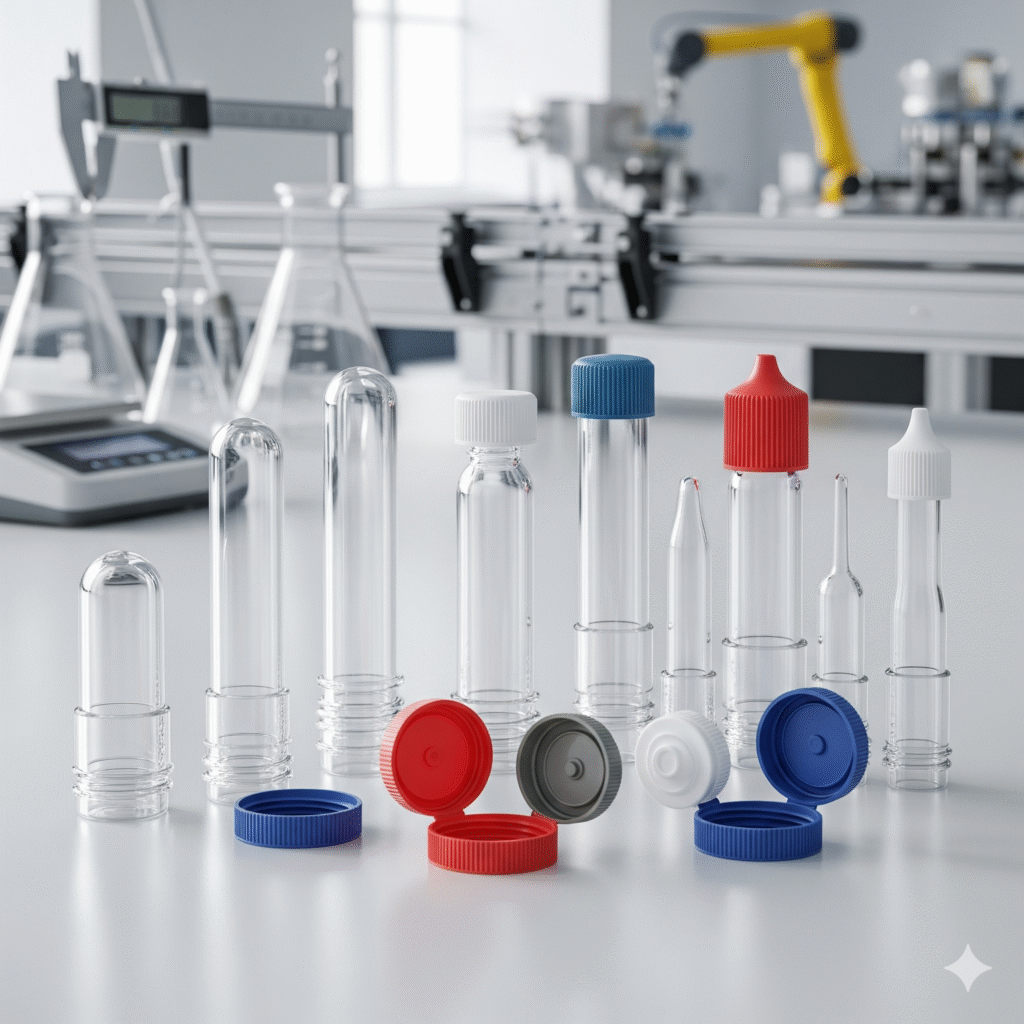
The closure systems for CSDs must be designed to maintain internal carbonation pressure during storage, transport and distribution. Generally, CSDs use a few common industry-standard neck finishes that include the following:
- PCO 1810 (Older, thicker threaded neck finish)
- PCO 1881 (Thinner, Eco-Friendly)
These neck finishes are compatible with tamper-evident caps that are designed to maintain the carbonation of the CSD. Using an incorrect neck design may lead to any of the following issues:
- Poor sealing
- Leaking CO₂
- Cap blow-offs during storage or transportation
At DRJ Plasttech, our preforms have highly accurate neck dimensions due to our use of digital tooling systems to ensure optimal cap compatibility.
3. Barrier Performance and Shelf Life
On shelves, CSD drinks must maintain their carbonation for several months. Because PET naturally permits some gas permeation, selecting the appropriate preform design and additives is essential.
Improvements to barrier performance consist of:
- PET layers mixed with barrier materials such as nylon or EVOH are known as multilayer PET preforms.
- Active Additives: To lessen oxidation, oxygen scavengers are mixed into the resin.
- Plasma Coating (post-mould): After the bottle is formed, thin internal coatings are applied.
These techniques are necessary for products with longer shelf lives or premium positioning, even though they may increase costs.
4. Preform Clarity and Crystallinity
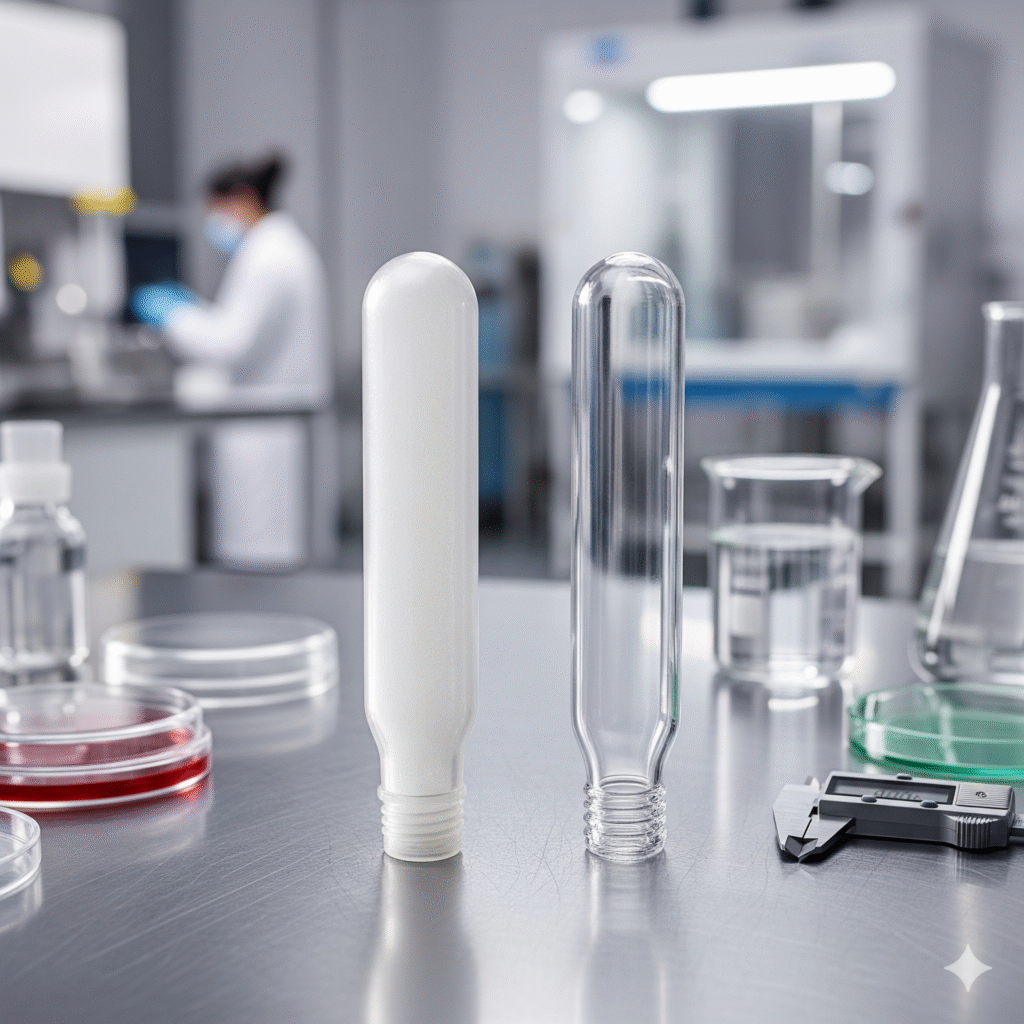
A PET preform’s degree of crystallinity influences both mechanical performance and appearance.
- Stronger but opaque, high crystallinity is not the best option for transparent CSD bottles.
- Better transparency but weaker under pressure is the result of low crystallinity.
It is necessary to carefully regulate the PET preform heating temperature during injection moulding and reheat blowing to achieve ideal crystallinity. Bottles that are brittle or hazy due to inconsistent heating are unsuitable for branded goods.
To maintain optimal crystallinity levels in each plastic bottle preform we produce, DRJ Plasttech employs precise temperature control and mould cooling systems.
5. Mould Compatibility and Blowability
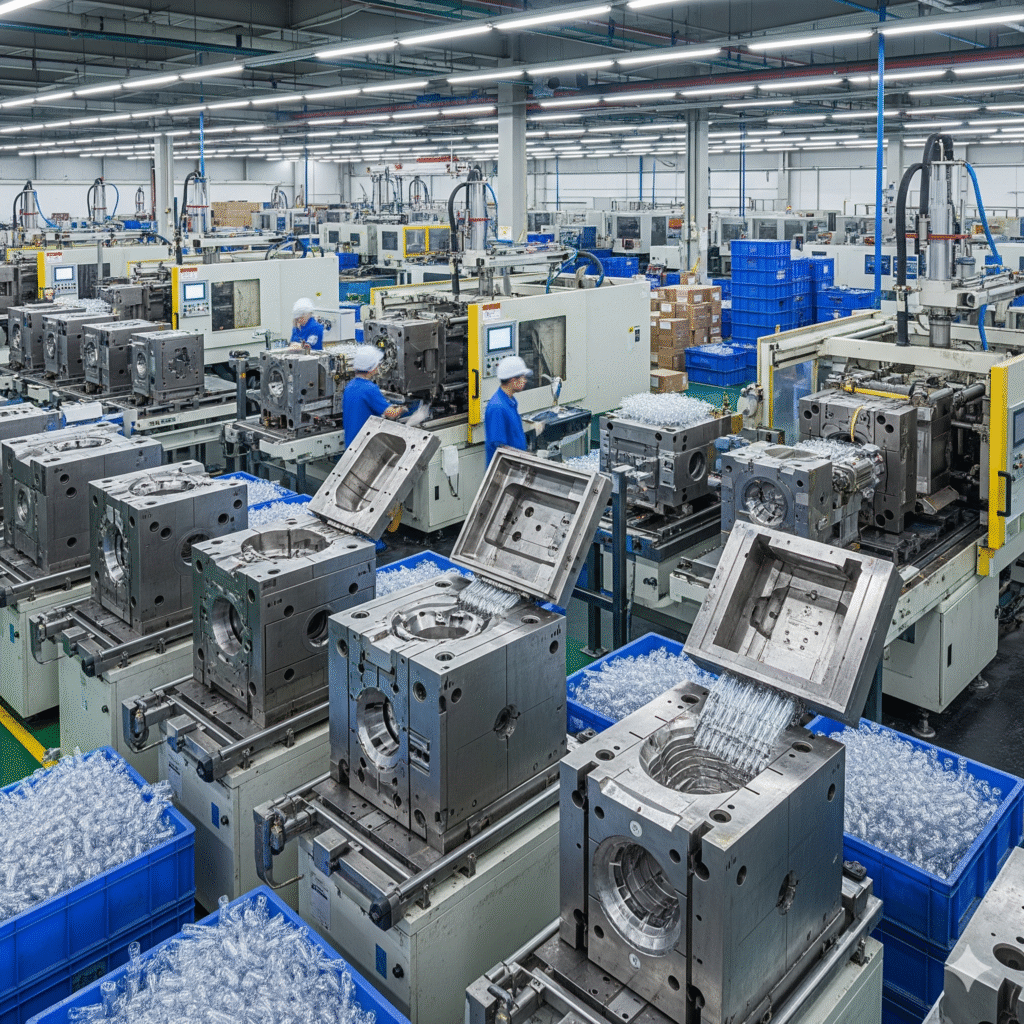
Your chosen preform must be compatible with your moulds and wheels.
Some considerations include:
- Ratio of stretch length to height of bottle
- Compatibility of neck ring location with blow mould
- Heating profile for the preform in the heater oven (aesthetic and mechanical performance);
- Expansion ratio during stretch blow moulding.
The geometry of the preform, including wall thickness distribution and shoulder design, is critical for the proper performance of the finished bottle. Mismatched components may cause:
- Non-uniform wall thickness of the bottle
- Cracking of the base
- Flaking or cam-pulling of the bottle when pressurized
At DRJ Plasttech, we provide a full range of custom design and preform design services to help you get the best results from your preform in your blowing and filling operations.
6. Resin Quality and Moisture Control

Because PET is hygroscopic, it takes in moisture from its surroundings. This moisture becomes steam during injection if it is not adequately dried, weakening the structure and producing micro-bubbles.
Dangers of inadequate moisture management
- fragile preforms
- Changes in color or yellowing
- decreased retention of CO2
- Insufficient transparency
In order to maintain the ideal resin moisture content (below 0.005%) at our Surat facility, a crucial step in guaranteeing the long-term durability of our plastic bottle preforms, we employ highly effective dehumidifying dryers..
Common Use-Cases: Matching Preforms with Bottle Sizes
| Bottle Size | Preform Weight | Neck Finish | Notes |
| 250 ml | 23g–25g | PCO 1881 | For compact, single-serve formats |
| 500 ml | 28g–30g | PCO 1881 | Most common size for on-the-go CSD |
| 1 Litre | 34g–38g | PCO 1810 | Requires stronger wall support |
| 1.5 Litre | 40g–45g | PCO 1810 | High internal pressure; durability critical |
| 2 Litre | 45g–48g | PCO 1810 | Ideal for family packs and multi-serves |
The table above serves as a rough guideline for product selection; however, the end specifications must be confirmed through actual bottle blow testing.
Step-by-Step Process for Choosing the Right PET Preform
To correctly pick the best PET Preform to be used to produce bottles (in particular for CSD applications), a detailed selection process takes place. To assure long-term performance as well as efficient function, the following is a detailed outline of how to achieve those results:
Step 1: Identify Your Beverage Specifications
- Carbonation Level: Drinks with a higher carbonation level, like soda, require stronger preforms than those with a lower carbonation level, like flavoured sparkling water.
- Shelf Life: Improvements to the barrier may be necessary for a longer shelf life.
- Filling Technique: Material behaviour is impacted by hot-fill or cold-fill.
Step 2: Define Bottle Size and Geometry
- Establish the final bottle volume (e.g., 250ml, 500ml, 1.5L).
- Take into account unique design elements that impact wall thickness during blowing, such as grip patterns or broad shoulders.
Step 3: Select Appropriate Preform Weight
- Select a plastic bottle preform weight that is both economical and satisfies structural and marketing requirements. To strike a balance between material savings and durability, always test a variety of weights.
Step 4: Choose Neck Finish and Closure System
- Make sure it complies with CO2 retention requirements, tamper-evidence requirements, and your capper machine. Because of its robust yet lightweight design, PCO 1881 is now a popular choice.
Step 5: Validate Resin Quality
Make sure the resin is:
- Food-grade
- Devoid of impurities
- possesses an IV (Intrinsic Viscosity) of 0.76–0.84, which is appropriate for CSD bottle blowing.
Step 6: Conduct Blowing and Filling Trials
To test blow moulding under real-world production conditions, use sample preforms. Assess for:
- Stability of the base
- Symmetry of the sidewall
- Cap fit and integrity of the seal
Common Mistakes to Avoid
This is just a sample of the errors that even experienced team members can occasionally make when designing bottles or increasing costs. Use the following guidelines as a reference for avoiding these types of mistakes:
Water Bottle Preforms for Carbonated Beverages (CSD):
Using a water-bottle preform to make a CSD bottle is a false economy. A water-bottle preform is too light and not intended as a carbonated packaging option, resulting in high scrap rates due to leakage.
Ignoring the Precision of the Preform Neck:
To ensure a tight seal on a carbonated closure, the neck thread must be within the required specification. When the neck thread is not produced to the correct dimension, CO2 leaks slowly and the shelf life is affected.
Without a Justification, Overweight Preforms:
A heavier bottle is not always better. Increased weight, by adding one additional gram of material, increases the material costs and reduces the line efficiency. It is always recommended to run testing of all alternatives before committing to a design.
Inadequate Quality Checks:
If moisture or temperature is skipped during the injection process for a preform, then crystallinity will occur in the bottle or yellowing or uneven blowing will occur during the blow-moulding process.
Lack of Customization:
Every bottle design and filling operation will have different requirements. Purchasing from an off-the-shelf supplier will not provide the best results without the proper customization of the preforms or packaging components.
Final Thoughts
Whether you are starting a new brand of CSDs or making improvements to existing packages, we guarantee that the plastic preforms you select for your bottles will yield high performance and profits.
Packaging is more than just a means of delivering a product to the market; it is the customer’s first impression of the brand. When your bottle has deformities, leaks, or loses carbonation, it can quickly ruin your reputation and increase expenses associated with returns. Therefore, selecting the appropriate PET preform for your bottle production is an important choice for your business. Working with a knowledgeable and experienced manufacturer such as DRJ Plasttech can provide you with added benefits of high-quality engineering, technical assistance, and a commitment to creating a lasting partnership. The plastic preforms we manufacture represent a critical component of how well your product performs on the shelf and in your customer’s hands.
FAQs on CSD PET Preforms and Bottling
1. What is a plastic bottle preform?
A moulded intermediate product composed of PET resin is called a plastic bottle preform. It is subsequently blow-moulded into a bottle and has a threaded neck similar to a test tube.
2. Why is PET the best material for CSD packaging?
PET has outstanding clarity, is lightweight, recyclable, and strong enough to withstand carbonation. Additionally, it works well in high-speed bottling settings.
3. How does a PET bottle perform differently in CSD than in water?
CSD preforms usually have a stronger neck finish and are heavier. They are made to withstand increased internal pressure without distorting.
4. What is the significance of preform weight?
The final bottle’s capacity to hold CO2 without failing is influenced by its weight. The walls of heavier preforms are thicker and more structurally sound.
5. Can I make CSD preforms using water preform moulds?
It is not advised. Stronger bases and more consistent stretching are required for CSD bottles, which might necessitate modifications to the mould design.
6. What temperature is best for preform heating CSD bottles?
Depending on the type of resin, it is typically between 270°C and 290°C. Regular heating guarantees appropriate stretch during blowing and avoids yellowing.
7. How do PCO 1810 and 1881 differ from one another?
An older, heavier neck finish is PCO 1810. Due to cost and material savings, PCO 1881 is now more popular, lighter, and more effective.
8. How can I stop CSD bottles from leaking?
Use the appropriate cap, make sure the neck finish dimensions are exact, and test the closure system under pressure. Preforms from DRJ Plasttech are digitally calibrated to satisfy sealing requirements.
9. Does CSD require barrier additives?
Not all the time. Single-layer PET is frequently adequate for the typical shelf life of three to six months. Take into account coating or multi-layer solutions for longer durations or export goods.
10. Where in Gujarat can I find a trustworthy PET preform supplier?
Based in Surat, DRJ Plasttech is a reputable supplier that offers customized PET preforms for bottle manufacturing that are optimized for edible oil, CSD, and other applications.
Why DRJ Plasttech is the Preferred Supplier for CSD Preforms
The demand for precision in CSD bottling is subject, however, to more than just being a precise supplier; the requirement of reliability. DRJ Plasttech can produce over 15t each day whilst being present in most of the states surrounding Gujarat.
- Tailored solutions for the different volume ranges of CSD preforms
- A dependable supply of CSD preforms at short notice
- PCO neck experience with digitally manufactured tooling
- A moisture control management system which has been enhanced by technological advances
- Technical Trial Assistance For Filling/Blowing Trials