
When considering the production of plastic bottles, there are many things to pay attention to, such as design, weight & clarity. But here’s the reality, the PET preform neck type size is critical for your packaging line. It affects how efficiently capping takes place, how well it resists leaking, and how happy customers are after receiving their products, whether that product is a beverage, edible oil, or pharmaceutical. In fact, by 2025, the market for PET preforms will reach approximately USD 17.5 billion and will be worth around USD 26.9 billion by 2035, a CAGR (Compound Annual Growth Rate) of 4.4%. So you must have proper neck type sizing for your PET preform!
Table Of Content
- Why PET Preform Neck Size Matters More Than You Think
- The Most Common Neck Size Standards Explained
- Mistake #1: Using the Wrong Neck Size for the Product Type
- Mistake #2: Ignoring Cap Compatibility During Preform Sourcing
- Mistake #3: Switching Neck Sizes Without Recalibrating Machinery
- Mistake #4: Overlooking Neck Finish Tolerances
- Mistake #5: Ordering One-Size-Fits-All Preforms Across Multiple SKUs
- How to Read Neck Finish Specifications the Right Way
- What Happens When You Ignore ISBM Compatibility
- The Financial Cost of Neck Size Errors (Spoiler: It’s Not Just the Bottle)
- How to Choose the Right PET Preform Neck Size Every Time
- Fixes for the Top 5 Neck Size Mistakes (Without Starting from Scratch)
- Final Thoughts: Don’t Let the Neck Be Your Bottleneck
Why PET Preform Neck Size Matters More Than You Think
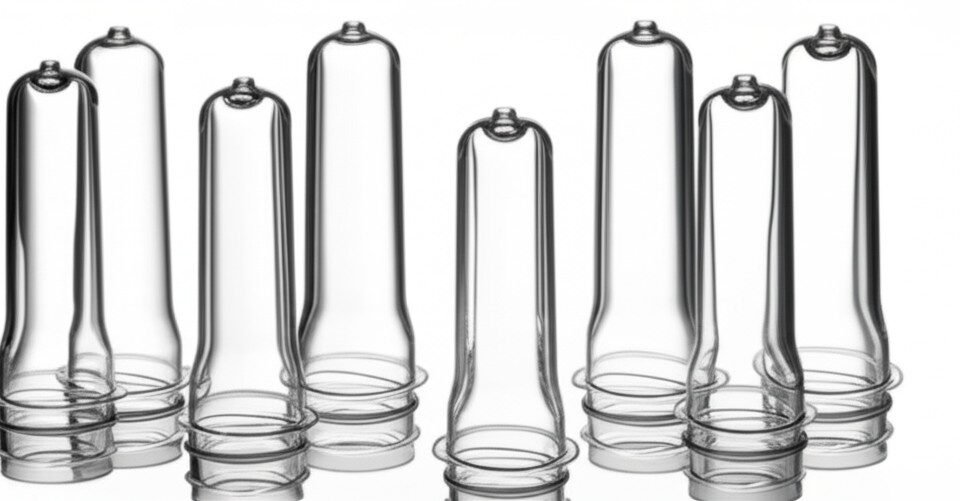
The neck size refers to the upper portion of the PET preform that holds the cap, and where the seal is created. If your cap does not fit properly, or if it does not line up correctly with the preform, you will see leakage or loose caps and potentially damaged products on shelves. From a technical perspective, it is essential to align the neck size of the PET preform with the appropriate cap, the product being filled, and the amount of pressure that will act on the container once filled.
So, if you choose the wrong neck size for your PET preform, you are risking a loss in profitability!
The Most Common Neck Size Standards Explained (28mm, 30/25, PCO, Alaska, etc.)
Around the world and especially in India, there are various standard types of neck sizes for PET preforms. The most common PET preform neck sizes will be discussed here, and an explanation of when to use the neck sizes will also be given.
Common PET Preform Neck Types:
- The 28mm PCO neck is commonly used for soft drinks (such as carbonated soft drinks) because it has excellent strength and can withstand high-pressure applications.
- The 30/25 neck is used primarily for packaged water and still beverages because it is a solid, less expensive option than the 28mm PCO neck.
- The Alaska neck is a PET preform that can be used for both water and oil bottles. It is a very common neck shape because of its leak-resistant capabilities.
- The 38mm neck with 3 threads is larger (38mm), making it ideal for juice and milk because it facilitates pouring.
- Short neck preforms (28mm SC or 1810/1881) were created to minimize the amount of resin required to manufacture the bottle and reduce costs.
Each of these neck sizes has different thread designs and sealing capabilities, as well as its compatibility with caps. For example, the Alaska neck preform has a tamper-evident closure, which makes it an appropriate choice for edible oils and dairy packaging.
The problem is that many manufacturers do not pay attention to the various thread profiles in the 28mm neck size (such as 1810 and 1881), thinking that all 28mm neck sizes are the same, but there are slight, yet critical, differences between them.
When selecting an appropriate neck type, each cap/closure type and filling method will determine which neck type will produce the best performance and, most importantly, keep the customers safe.
Mistake #1: Using the Wrong Neck Size for the Product Type
Assuming you are packaging the carbonated beverages in a lightweight 30/25 PET preform neck due to cost, this is a huge mistake, because the low quality of these preforms can lead to exploding bottles or leaking caps due to the build-up of pressure that occurs with carbonated beverages.
Using a 28mm Alaska neck preform for high viscosity edible oils may work for a while, but it can cause a drip problem, have loose closures, and create complaints from consumers about messy pouring.
What Causes This Issue?
- Purchaser’s emphasis on price rather than compatibility
- Communication breakdown between the purchasing and R&D departments
- Suppliers providing stock to the customer instead of tailoring products to fit specific needs
Mistake #2: Ignoring Cap Compatibility During Preform Sourcing
It’s common for manufacturers to buy PET preforms in bulk without checking for cap compatibility. When this happens, manufacturers will have a mess on their assembly lines.
Here are the problems that can occur when cap and preform compatibility is ignored:
- Clogged, misaligned capping machines
- Caps cracking or popping off because they were not threaded properly onto the preform neck
- Tamper-proof bands are not sealing correctly, or the band tearing prematurely.
An example of PET preforms that require specific tamper-proof caps is those with an Alaska neck. You don’t want to attempt to use generic 28mm closures on Alaska neck preforms – that’s a mistake.
There are a few reasons why manufacturers usually don’t check for cap compatibility:
- Procurement teams are only looking at weight and costs.
- Suppliers assume the buyer knows about cap thread compatibility.
- There is no trial fitting preforms to caps before making the bulk order.
To avoid these problems, ask suppliers for the following:
- Engineering specifications for cap compatibility
- Trial sample caps to be tested with preforms
- Instructions for cap machine adjustments
Always test your preforms to your actual caps and capping machines before mass production. This small step can save you significant time and money.
Mistake #3: Switching Neck Sizes Without Recalibrating Machinery

When you switch your preform neck from a 28mm Alaska to a 30/25 mm PET, you may think you have saved some money. However, without ensuring that your blow moulding and capping equipment has been calibrated after the change, you could find that your rejection rates will rise to at least 10% to 15% higher.
The risks associated with this type of transition include:
- Poorly blown-out bottles
- Breakdowns of seals during the production line
- Mismatch of threads between the cap and the neck
Each manufacturer has specific blow moulding machines for different PET preform neck types. Therefore, any slight difference in the thread geometry will lead to problems during the entire production run.
The best way to avoid these issues is:
- To notify the production team before switching neck sizes
- Update your blow moulds and cappers specifications
- Perform small test batches to ensure they work together.
Semi-automatic PET bottle production lines are becoming increasingly popular with manufacturers across India, particularly in Tier-2 cities. These setups require accurate alignment of the blow moulding, capping, and necking equipment, so do not let an incorrect neck size disrupt your operations.
Mistake #4: Overlooking Neck Finish Tolerances
Concerning neck finishes, tolerances refer to the amount of variation permitted in the diameter and thread dimensions of a PET preform’s neck. Even a 0.2mm difference from specification can result in significant seal problems at higher production speeds.
The impact of the tolerances in the real world is:
- Poor seal strength
- Tamper bands do not engage properly.
- Bottles will wobble or not stack together properly.
According to BIS standards (IS 14534:1998), the allowable range of tolerances for neck finish is very strict to maintain the cap integrity and leak-proof design. Many small manufacturers do not pay any attention to these standards.
For example, Alaska neck PET preforms require tighter tolerances than standard necks due to the unique design of the sealing ring. If the band does not properly engage the sealing ring, there are compliance issues with the tamper evidence in India.
To verify, it is always advisable to request a dimensional tolerance report from the supplier and compare it to the closure specifications for your caps. Achieving a high level of dimensional accuracy upfront will reduce product rejections later in the production process.
Mistake #5: Ordering One-Size-Fits-All Preforms Across Multiple SKUs
Manufacturers that attempt to simplify the procurement process typically choose to use a universal PET preform across multiple product categories. On paper, this approach appears to be a good option; however, it does not take into consideration the fact that using one preform neck size for carbonated beverages, non-carbonated beverages, and cooking oils is problematic.
What Could Go Wrong?
Bottles designed for carbonated beverages do not have the same sealing capability when compared to Non-carbonated cap closures. Caps may not fit properly, thus creating an increased likelihood of customer complaints or leaking products. Packaging inconsistency also negatively impacts brand image.
For instance, the Alaska neck PET preform may work well for Non-carbonated beverages and cooking oils; however, it may not withstand the pressure associated with carbonated applications.
There is no “one size fits all” solution for the neck design of PET preforms, as they vary among various SKUs and are predominantly based upon the following factors:
- The viscosity (thickness or stickiness) of the liquid being packaged.
- The shelf life is required for the product.
- The speed at which the product will be filled and capped.
The Solution:
Map your product SKUs to the specific neck type of PET (plastic) preform that you will utilize. Do not select a preform based solely upon the fact that it is easy to procure; doing so will cost you in the end.
How to Read Neck Finish Specifications the Right Way

Although the descriptions of neck finishes are long and complicated, knowing the basic definitions will help make sure you do not make mistakes that could cost money.
Important terms to remember:
- T Threads: Screwcaps are manufactured using T thread specifications. The T threads should be the same profile as the cap.
- Start Angle: The start angle of the T threads is critical to how well the cap will attach to the bottle neck.
- Neck Ring: The neck ring is the small protrusion of plastic that is located immediately below the T threads and serves to align the bottle properly when it is filled by the bottle filling machine.
For instance, if the PET preform for an Alaska neck bottle states:
- Neck Type: Alaska / 28mm / 1810
- Thread Start Angle: 120°
- Neck Ring: 21mm
And the start angle of the cap does not match the start angle of the bottle neck, or if the neck ring of the bottle neck is too high when contacted by the machine, the sealing of the bottle will not be aligned correctly, even though everything else appears to be correct.
Pro Tip:
Obtain a neck drawing from the supplier that includes the specifications (tolerances) for the neck ring and compare it to the specifications of your cap manufacturer. Do not skip trial production, even if the specifications appear to be accurate. Ensure that you understand these details, so that your PET preforms not only like they are compatible with your bottles, but they will also function together properly.
What Happens When You Ignore ISBM Compatibility
The process of producing PET bottles through the technology of injection stretch blow moulding is called ISBM, with every ISBM machine being designed for a specific type of neck, mould dimensions, and blowing conditions. Ignoring compatibility issues when switching between ISBM types can lead to:
- An increase of as much as 20% in scrap rates
- Uneven wall thicknesses
- Neck distortion, which could render the bottles unusable
For example, if an ISBM line was originally designed to produce 30/25 preforms but you suddenly introduce a different type of preform (Alaska neck) into the production process, you may find that your stretch rod alignment is out of place, which can result in an entire shift’s worth of production being destroyed.
What should you do?
- Provide your supplier with the specifications for the neck ring and stretch rod from your ISBM line.
- Carry out a small test run before ordering large quantities of preforms with different neck designs.
- Ensure that you keep your ISBM machine calibrated and that all calibration records are maintained.
The Financial Cost of Neck Size Errors (Spoiler: It’s Not Just the Bottle)
Are you under the impression that making a mistake in the neck size of a preform will only cost you a few rupees? Think again.
- Rejected Preforms: Wasted production cost of ₹1.50 to ₹2.00/unit.
- Downtime: Lost production cost of ₹5,000 to ₹20,000/hour.
- Returns from Distributors: Up to ₹3 lakhs for a rejected batch of product.
- Lost Trust/Brand Value: Priceless.
As seen in the highly competitive bottled water and edible oil markets in India, errors in packaging can lead to very high costs quickly.
How to Choose the Right PET Preform Neck Size Every Time
This is a basic step-by-step overview of selecting the most appropriate neck type for your product, without taking too long to consider each possibility.
Preform Neck Selection Checklist:
1. Identify your product (i.e., carbonated, still, oil, pharmaceutical).
2. Select a neck type for your specific needs.
For Water: 30/25 or Alaska
For Soda: 28mm PCO
For Oil: Alaska or 38mm
3. Choose a neck based on the specifications of your caps (i.e., threads, tamper bands, and materials).
4. Consider how the filler will work with respect to speed, capping torque, and orientation.
5. Look to the BIS for general guidelines on what is considered “food-safe” for PET products.
6. Produce some test runs.
7. Find out how your machine works.
This should be used in conjunction with all other procurement processes as a safety net against making costly mistakes regarding the selection of PET neck types.
Fixes for the Top 5 Neck Size Mistakes (Without Starting from Scratch)

If you’re dealing with the wrong neck sizes, keep calm! There is a solution for many of these issues, and here are some ideas:
- Cap Mismatch: Look for caps that will fit the preform’s thread size.
- Poor Sealing Performance: Insert liners into the container for improved closure performance.
- Capping Machine Calibration Issues: Consult with a technician to calibrate your capping machine’s capping head or stretch rod.
- Poor Tolerances: Find a supplier that meets the precision tolerance required by the processed product, and ensure that they are Biologics Industry Servicing (BIS) certified.
- Preform to SKU Mismatch: Consider moving preforms from one SKU to another due to compatibility.
For example, if your Alaska neck PET preform is not sealing for carbonated beverages, use it for bottled water or cooking oils instead. You can save a fortune on replacement costs with some creative thinking and some minor technical adjustments.
Final Thoughts: Don’t Let the Neck Be Your Bottleneck

Although the PET preform neck size may seem like a minor detail when it comes to the overall process of creating bottles, it can actually lead to a lot of problems if it isn’t considered carefully. Poorly matched caps and long periods of machine downtime can be a result of mistakenly selecting the wrong type of PET preform neck, and it applies to your entire production line, whether using Alaska neck or standard 28mm finishes. The main takeaway? Know what you are making, be familiar with how your machinery works, andmaintain a good relationship with your suppliers by sharing information.
All of these mistakes can be avoided. By understanding some of the basics of the process and having a checklist, you will be able to avoid costly production rejections, improve the quality of your finished goods, and maintain a smooth, flowing operation. If you are looking for a manufacturer who adheres to all of the above and then some, check us out.