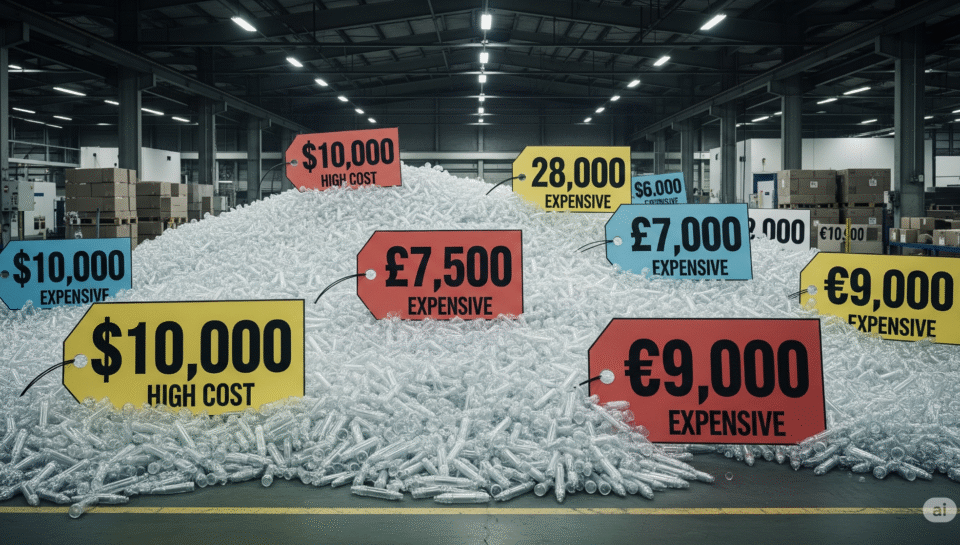
If you think you’re paying too much for PET preforms, you’re probably correct! This article will cover everything you need to know about the quality of PET bottle preforms, as well as how to make smart decisions when purchasing PET bottles for wholesale.
Table of Contents
- What are PET Preforms?
- From preform to bottle – how does this happen?
- The Hidden Cost of Overpaying: It’s Not Just the Price Tag
- Why Prices Vary So Much for the Same Product
- Virgin vs. Recycled PET: Does It Really Matter?
- How to Spot a High-Quality PET Preform
- The Role of Resin in Pricing: What’s Inside That Matters
- Buying Local vs. Importing: What’s Really Cheaper?
- MOQ (Minimum Order Quantity): When Bigger Isn’t Always Better
- The Dangers of One-Size-Fits-All Preforms
- How to Read a Preform Specification Sheet Without Falling Asleep
- Red Flags to Watch Out For When Comparing Quotes
- Questions Every Buyer Should Ask Their PET Preform Supplier
- Future-Proofing Your PET Preform Purchases
- Wrapping It Up (But Not the Bottles)
What Are PET Preforms?
A PET preform is simply a small piece of plastic that is used to create a finished product that is significantly different from the PET preform itself. PET preforms are typically created using a mould. During manufacturing, the small pieces of plastic are heated until they become malleable and able to be formed into the desired shape.
Easily moldable PET preforms are very popular within the beverage, cosmetic, and pharmaceutical industries because they are easy to create using standard manufacturing processes. With the global market for PET preforms reaching an estimated 27 million tons according to Statista, India is among the fastest-growing markets!
Why Should You Care About PET Preforms?
- Lightweight
- Easy to mold
- Resilient and durable
- Very cost-effective for manufacturers who produce a high volume of products
The demand for PET preform products is currently skyrocketing: In 2022, Statista estimated that the size of the global PET market was $23 billion and growing rapidly because of its use in beverages.
When purchasing PET bottles in large quantities, knowing plastic preforms will put you well ahead of other purchasers. If you do not know what you’re purchasing for PET bottles, you might be paying too much and getting less than you expect.
From Preform to Bottle: How the Magic Happens
Did you ever notice how a small preform bottle is transformed into a full-size PET bottle? It is similar to watching a balloon blow up, except for all of the technical processes involved.
It looks like this:
1. Heating
The first step to creating a PET bottle is heating the preform in the infrared ovens to heat evenly throughout.
2. Stretching
The preform must be stretched by the stretching rod to evenly stretch the preform vertically.
3. Blowing
Finally, the preform must be blown into the shape of a bottle using high-pressure air blown into the preform inside the bottle mould.
4. Cooling
After being cooled, the bottle will stay in its new form.
The entire process takes a matter of seconds and is very efficient, which is why PET preform bottles are used widely in high-speed manufacturing.
For example, a 30-g PET preform can be transformed into a 1-L bottle for carbonated beverages or bottled water. The same mould can be reused many times, resulting in lower production costs and shorter production lead times.
If you are looking for wholesale PET bottles or require a limited amount of product, understanding how PET preforms work will help you make informed decisions about which specifications to choose.
Sounds simple? It can be very challenging to accomplish without high-quality PET preforms.
If you do not have a well-manufactured preform, you can experience weak bottle walls and leaks in the closure, and even have complete production failures. All of the output from a carbonated beverage factory or small bottled water company depends entirely on strong production-quality bottles made from PET preforms.
The Hidden Cost of Overpaying: It’s Not Just the Price Tag
You may dismiss ₹0.50 as an insignificant amount when purchasing one PET preform, but if you were to purchase 1 lakh units of the same preforms, your loss would become apparent as your expenses increase by ₹50,000.
The true cost of your PET preform purchases is as follows:
- High markup on resin cost (resin prices are actually lower than this).
- Shipments that use minimum order amounts (MOQs) do not allow for flexibility in your stocking schedule.
- Logistics are less effective due to the location of your supplier.
- More downtime whenever the quality of a shipment requires a return.
The India Brand Equity Foundation estimates India’s packaging industry will grow by 18-20% per year, which is causing significant competition among companies. Understanding how much you’re losing on bottle preforms will help you to maintain your production costs to be more competitive in the market.
In conclusion, paying extra for a “slightly higher priced” PET bottle preform will cut into your profit margins.
Why Prices Vary So Much for the Same Product
Have you ever wondered why one supplier charges ₹4 for a PET preform and another charges ₹6 for a PET preform that appears to be the same? The price differences can be attributed to:
Type of Resin Used to Make the Preform
Virgin resin vs. recycled resin.
Location of Supplier’s Facility
Shipping costs differ between states, which increases costs.
Quality of Mould Used to Manufacture the Product
Higher-quality moulds provide greater precision and create higher-cost items.
Number of Units Ordered
Buying in higher quantities generally results in lower per-unit pricing.
Weight of Preform
A preform that weighs 26g can be used for a different purpose than one that weighs 32g.
Even colour affects cost! Green-tinted PET preforms that are manufactured for use with carbonated beverages generally cost more due to the price of pigments. To save yourself money, don’t just compare products’ prices, but also the specifications of the products, the type of resin used, and the reliability of suppliers.
Virgin vs. Recycled PET: Does It Really Matter?
Virgin PET is produced from derivatives of crude oil and has excellent clarity and tensile strength, making it ideal for wholesale food-grade PET bottles.
Recycled PET (rPET) is made from the recycling process of used bottles. rPET is more environmentally friendly and generally less expensive than virgin material. The colour of rPET can vary slightly from the original colour of the bottle.
The McKinsey report indicates that the adoption of rPET would result in up to 25% less packaging-related carbon dioxide emissions.
In India, the BIS (Bureau of Indian Standards) is starting to allow the use of rPET for use in food packaging. As a result, the cost to make your bottle preform to use rPET will likely be a lower cost and greener than virgin materials and will still provide the same level of safety.
How to Spot a High-Quality PET Preform
The quality of the PET preform is of utmost importance because it has a direct impact on the durability, clarity, and overall performance of the finished product. A low-quality preform will produce a defective finished product, including a product with an inconsistent wall thickness, susceptible to weak seals or a hazy appearance, possibly damaging your company’s reputation. How can you determine whether a PET preform has been manufactured to a high quality? To help you make this determination, consider the following quality checklist:
- Translucency: Clear (Like Glass).
- Consistency of Weight: Consistency is critical.
- No Air Bubbles or Dark Specks: Indicates poor resin or machine cleanliness.
- Shape of the Neck: Correct Shape provides a Tight Seal.
- No Deformation: Represents Correct Storage and Correct Quality Control.
You can use a digital scale and callipers to check for compliance with specifications. If you have two different diameters at the neck, the loss can be equivalent to an entire production run diary.
The Role of Resin in Pricing: What’s Inside That Matters
If you want to know how much it costs to make PET preforms, then the most important factor is the price of PET resin. Prices for PET are determined by the costs of PTA (Purified Terephthalic Acid), MEG (Mono Ethylene Glycol), and others.
According to Plastemart, in India, PET resin prices fluctuate between ₹85 – ₹110/kg based on crude oil prices and consumer demand globally.
When you receive a quote from a supplier letting you know that the pricing has been increased, you should always inquire about:
- What is the market price for PTA/MEG at the time of your request?
- Is the resin that they use imported or locally sourced?
If you are aware of the trends surrounding PET resin, then you will have a better opportunity to challenge or negotiate competitive pricing for PET preforms.
Buying Local vs. Importing: What’s Really Cheaper?
When looking at Local Suppliers vs International Suppliers, these decisions will impact overall cost, timeline, and productivity. Both have advantages over the other, but the best option will continue to depend upon your particular priorities, budget, and needs within your operations. When comparing Local vs International sourcing, you will want to evaluate: pricing, lead time, reliability, and the potential for the best solution at the lowest price.
Local Sourcing Pros:
- Local suppliers usually deliver products more quickly.
- It is easier to perform quality checks on local suppliers.
- There are no tariffs or customs fees charged by local suppliers.
Importing Pros:
- Lower prices due to low resin prices worldwide.
- The ability to source from manufacturers who may specialise in moulds or preform types that you want.
However, importing products can result in an additional 18%-30% in tariffs or GST, plus an average 30-60 Days lead time on orders shipped internationally. If looking to purchase and stock PET Bottles Wholesale, frequent or time-sensitive requirements typically favour the ability to procure these bottles through a Local Supplier.
MOQ (Minimum Order Quantity): When Bigger Isn’t Always Better

When searching for PET preforms, you probably have come across many suppliers with very high minimum order quantities (MOQs), often as high as 100,000 (1 lakh) pieces. For large plastic preform manufacturers, this is often not a significant obstacle, but if you are a small business trying out a new product or don’t have room to store such large quantities, a high MOQ can create problems due to capital being tied up, lack of storage, and the possibility that your demand may not meet your expectations, leading to waste.
The good news is that you may not need to take these extremely high minimums.
Negotiate Split Deliveries
Some suppliers can break up the large quantity of your initial order into smaller shipments on a staggered basis. Instead of having to purchase 100,000 pieces in one delivery, you may be able to arrange to receive 25,000 pieces every few weeks. This will help you keep your stock at reasonable levels while satisfying the supplier’s requirement for the minimum number of preforms.
Partner with Other Buyers
If you don’t buy enough to meet the minimum order quantity (MOQ) set by the supplier, consider teaming up with other companies to place one bulk order of preforms. By combining orders, you meet the MOQ of the supplier while purchasing only what you need. This is particularly effective if you know other nearby bottlers, beverage companies, or packaging companies using similar preform materials.
Buy from Local Distributors (Instead of Factories Directly)
Many manufacturers have stringent MOQs, whereas local distributors or trading houses typically stock less than the minimum order quantity. They buy in large quantities from manufacturers and resell them in smaller quantities, and may even carry inventories of only a few thousand pieces at any given time. While you will pay a slightly higher price per piece, the ability to purchase what you want enables you to maintain the flexibility that you need as you grow your company.
Look for Suppliers with Lower MOQs
Not all suppliers require massive quantities to be ordered at once; many suppliers specialise in lower-volume production runs. By doing a little research, you can identify a supplier or trading house that’s willing to work with your numbers. Online business-to-business (B2B) marketplaces or trade associations in your particular field are excellent places to conduct your search.
The Dangers of One-Size-Fits-All Preforms
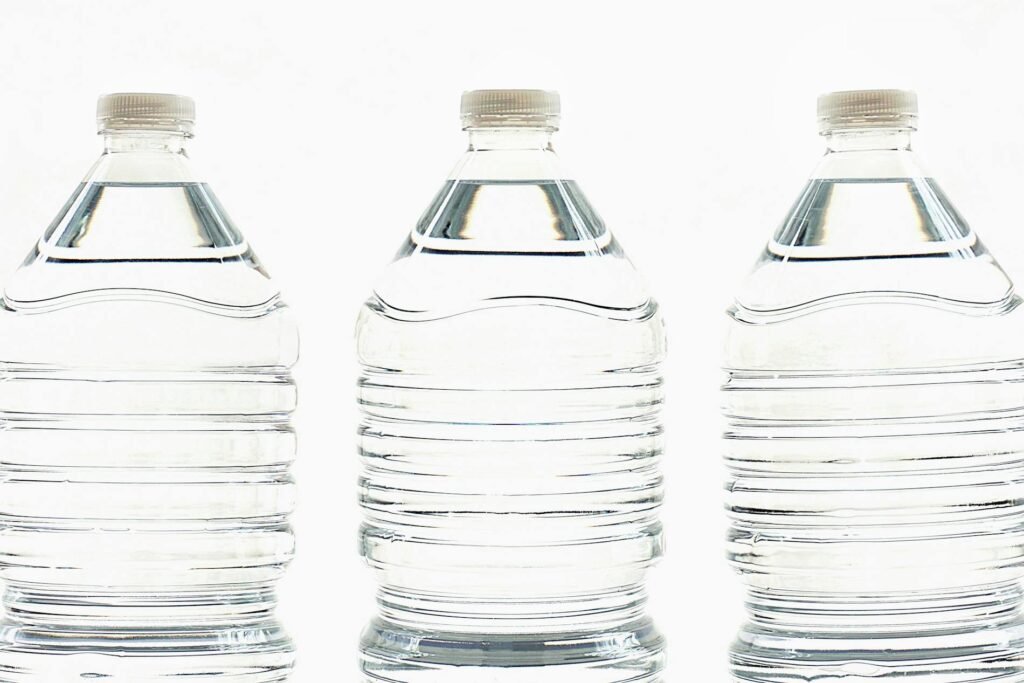
Different types of products use Different Types of Bottles. If you use the wrong bottle preform, you may:
- Create a leak or cause a build-up of pressure in the bottle
- Under- or over-weight your bottles
- Influence the shelf-life of the products you put into those bottles
A few examples of bottle types:
Almost all water bottles have a 28 mm neck; however, preforms for oils have heavier weights and wider necks than water bottles. On the other hand, carbonated soft drinks also require preforms that are built to withstand much greater wall strengths than standard water bottles.
Not using the correct PET preform bottle is more than just a bad fit; it’s a cost that you will incur.
How to Read a Preform Specification Sheet Without Falling Asleep

It resembles hieroglyphics, but here’s a quick reference:
- IV Value (Intrinsic Viscosity) – The higher this number, the better the quality of the preform, as well as making it stronger and clearer.
- Weight Tolerance – ±0.1g.
- Neck Types – 28mm, PCO, Alaska, etc.
- Crystallinity – The amount of crystallinity affects heat resistance and strength, and also how much light passes through the material.
Before you conclude your PET preform purchase, be sure to ask your vendor about these points.
Red Flags to Watch Out For When Comparing Quotes
While finding the best deals when you buy PET preforms to create or manufacture bottles for resale is a priority, the lowest quote might not always be the best option to consider. Some suppliers provide quotes that have exorbitantly inflated costs that are difficult for consumers to accept due to factors related to quality, reliability, etc. If potential customers do not recognise the signs of trouble before purchasing from these suppliers, they risk receiving unusable products, delayed deliveries, and possible legal issues concerning compliance.
Huge Price Gaps with No Explanation
A significant discrepancy between a supplier’s quoted price and other suppliers’ prices could be due to a lack of explanation as to why it is so much lower. This price difference should be treated cautiously since prices for PET preforms are influenced by factors including the quality of resin, the accuracy of the mould, and the level of quality control applied during the manufacturing process. Therefore, it is wise to consider:
- The supplier may be using inferior-quality PET resin (containing impurities or recycled materials that are not safe for use in food-grade bottles).
- By cutting corners in their production processes, they may produce weak or variable-quality bottle preforms.
- In addition to a low upfront price, the supplier may impose additional charges (such as freight charges, customs duties, or mould modification fees) later on.
Missing BIS or ISO Certifications
It is important to remember that all PET (Polyethene Terephthalate) preforms that are used in the food and beverage industry must conform to relevant industry regulations. Therefore, if you are working with a supplier who does not have:
- A BIS Certification (for buyers located in India)
- ISO 9001 Quality Management Certification or ISO 22000 Food Safety Certification
This is an indication of a significant risk, as any PET preform bottles that are not certified may not be able to pass safety testing, may cause leakage, or may have structural defects, all of which can result in the issuance of product recalls or customer complaints.
Vague Delivery Promises
When a supplier tells you, We will deliver when we are ready,” they may find themselves unintentionally placing an order out of service. Delayed PET Preform shipments will halt production if the buyer has a limited time to fulfil wholesale bottle orders. Look for:
- Written Definitions of Production and Delivery Dates.
- References Showing Reliability (History of on-time deliveries).
- Honesty in Disruptions (such as shortages of raw materials).
No Transparency on Resin Type or Mould Origin
High-quality PET preforms start with:
- Virgin PET resin (ensuring strength and clarity) or FDA-approved reclaimed resin.
- A manufacturer needs to have precision-cut moulds to ensure that the neck finishes are uniform and so that the wall thickness of the preform remains constant.
If the supplier cannot give the answers to the following questions:
- Where did they source the PET resin from? (You want to avoid sourcing non-food-grade resin for preforms, no matter how inexpensive.)
- Who is theimouldld manufacturer? (The precision and quality of the mould make a huge difference; poorly designed moulds generate inconsistencies and defects in the finished product.)
You may be at risk of buying preforms that crack, leak, or fail inspection during the blow-moulding process.
The “Cheap” Trap: Low Price, High Problems
Selecting the lowest bid might provide a temporary cost benefit, but a poor quality PET preform will result in:
- Increased rates of rejection (causing lost time and wasted materials).
- Leaking/breaking bottles (resulting in damage to your company’s reputation).
- Additional expense associated with reorders or overnight shipping.
Questions Every Buyer Should Ask Their PET Preform Supplier
Here are all the questions to ask:
- What is the resin grade and source?
- Is the PET preform certified safe for food use?
- What is your average delivery time?
- Do you conduct testing of sample products?
- Do you customize for my bottle preform?
Always ask, verify, and validate before assuming anything.
Future-Proofing Your PET Preform Purchases
The rapid pace of change in the beverage industry is undeniable. Here’s a summary of what’s headed your way: Minimisation of petroleum-based plastics through a lighter preforming process with PETs.
- Plant-based plastics as a viable alternative to petroleum-based plastics (currently testing).
- Transition of all consumer products from petroleum to 100% rpets.
A more intelligent approach to sourcing PET preforms can keep you ahead of the competition.
Wrapping It Up (But Not the Bottles)
If you find yourself overpaying for your preforms, you’re not alone. Informed consumers will have the advantage in future shopping.
The next time you visit a store to purchase PET preforms or purchase from an online PET bottle retailer, you’ll feel confident in the choices you make and knowledgeable enough to ensure you don’t end up misused by a seller.